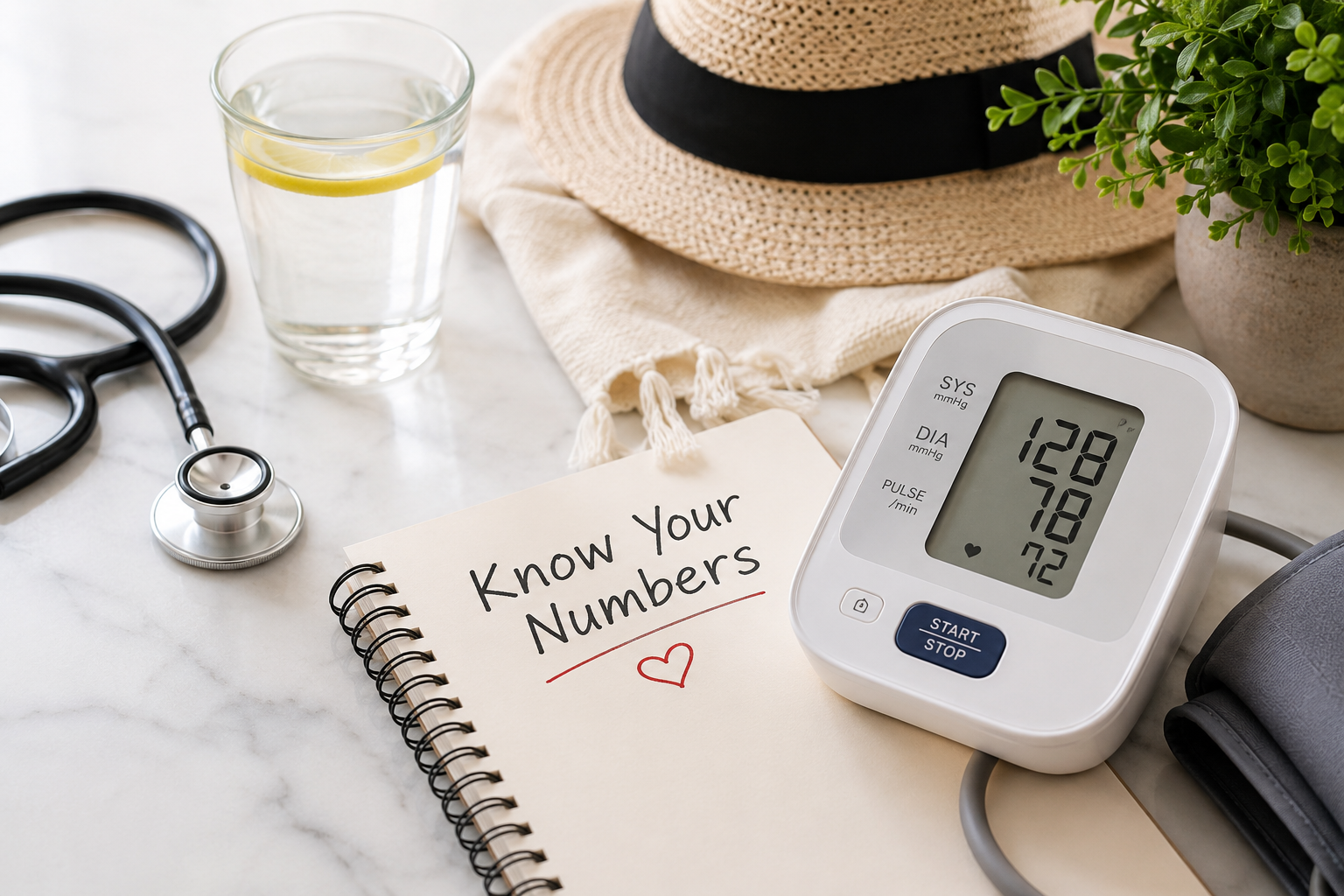
Heat and Hypertension: What the New Blood Pressure Guidelines Mean During Hot Weather
By Courtney Arianne Washington, DO
Hot weather affects more than your comfort. It can change your blood pressure, hydration status, kidney function, and the way certain medications affect your body.
In places like New Orleans, where I practice, high temperatures are often accompanied by intense humidity. In other parts of the world, people may face dry desert heat, prolonged heat waves, limited access to air conditioning, strenuous outdoor work, or unexpectedly high temperatures in regions that are not accustomed to extreme heat.
The climate may look different, but the medical concern is the same: your body has to work harder to regulate its temperature, and that can become dangerous when you have high blood pressure or take certain cardiovascular medications.
In emergency medicine, I have cared for patients who were taking their medications exactly as prescribed but still developed dizziness, weakness, dehydration, low blood pressure, electrolyte abnormalities, or kidney problems during periods of extreme heat.
The medication may not have been wrong. The conditions surrounding the patient had changed.
That is why blood pressure care should never be reduced to simply prescribing a pill and checking a number.
The 2025 American Heart Association and American College of Cardiology High Blood Pressure Guideline emphasizes a more precise and individualized approach to hypertension. The blood pressure categories have not changed, but the way clinicians determine who needs medication—and how aggressively they should be treated—has become more personalized.
This is especially important during hot weather, whether you are dealing with a Gulf Coast summer, a European heat wave, desert temperatures, a tropical climate, or a hot day spent working or exercising outdoors.
Prefer to Watch Instead?
Watch the full episode below, where I explain the updated hypertension guidance in plain language and discuss what it means during hot weather.
The First Major Blood Pressure Guideline Update Since 2017
The 2025 AHA/ACC guideline replaces the major hypertension guideline released in 2017. It continues the evolution away from the older JNC 8 approach, which many clinicians learned during training and may still remember.
The current blood pressure categories are:
- Normal blood pressure: less than 120/80 mm Hg
- Elevated blood pressure: 120–129 systolic and less than 80 diastolic
- Stage 1 hypertension: 130–139 systolic or 80–89 diastolic
- Stage 2 hypertension: 140/90 mm Hg or higher
For most adults receiving treatment, the recommended blood pressure goal remains less than 130/80 mm Hg. However, that target must still be considered within the context of the individual patient.
A person who is frail, frequently becomes dizzy when standing, is at high risk of falling, has a limited life expectancy, or has other complex medical conditions may require a different treatment strategy.
A treatment goal is not the same thing as an automatic treatment plan.
Two People Can Have the Same Blood Pressure and Receive Different Treatment
Consider two people who both have an average blood pressure of 135/85 mm Hg.
One may be advised to begin medication. The other may be given several months to focus on nutrition, exercise, weight management, sodium reduction, sleep, and other lifestyle changes.
Both approaches may be consistent with the guideline.
The difference is their overall cardiovascular risk.
Someone with diabetes, chronic kidney disease, a previous stroke, established cardiovascular disease, or a higher calculated risk of a future cardiovascular event may benefit from starting medication earlier.
Someone without those risk factors may reasonably begin with intensive lifestyle changes and close follow-up before medication is added.
This is not inconsistent treatment. It is individualized treatment.
The PREVENT Calculator Changes the Conversation
One of the most important updates is the use of the American Heart Association’s PREVENT™ cardiovascular risk calculator.
PREVENT stands for Predicting Risk of Cardiovascular Disease EVENTs. It estimates a person’s 10-year and 30-year risk of developing cardiovascular disease, including heart attack, stroke, and heart failure.
Unlike older cardiovascular risk models, PREVENT incorporates cardiovascular, kidney, and metabolic health. It was developed and validated using data from more than 6.5 million diverse adults in the United States and is intended for adults ages 30 through 79 who do not already have known cardiovascular disease.
The calculator may include information such as:
- Age and sex
- Blood pressure
- Cholesterol levels
- Kidney function
- Diabetes status
- Smoking history
- Body mass index
- Use of blood pressure or cholesterol medication
Additional information, including hemoglobin A1c, urine albumin-to-creatinine ratio, and measures related to social disadvantage, may further personalize the estimate.
For a person with Stage 1 hypertension and no established cardiovascular disease, diabetes, or chronic kidney disease, a 10-year PREVENT cardiovascular risk of 7.5% or higher supports beginning medication along with lifestyle changes.
When the calculated risk is below 7.5%, an initial three- to six-month trial of intensive lifestyle modification may be appropriate. If the average blood pressure remains at or above 130/80 mm Hg, medication is then recommended.
The blood pressure reading matters, but it is no longer the only number guiding the decision.
Although PREVENT was developed using United States data and is part of the current American guideline, the broader principle applies everywhere: blood pressure treatment should reflect the patient’s total cardiovascular risk, not one isolated reading.
People outside the United States should discuss which cardiovascular risk tool and hypertension guideline are recommended in their country.
What Happens When Blood Pressure Is 140/90 or Higher?
An average blood pressure of 140/90 mm Hg or higher falls within Stage 2 hypertension under the AHA/ACC classification.
For most adults in this range, lifestyle changes alone are not enough. Medication is generally recommended in addition to lifestyle treatment, regardless of the calculated PREVENT risk.
The 2025 guideline also favors beginning treatment with two first-line medications from different drug classes for Stage 2 hypertension. Whenever possible, those medications may be combined into one pill.
A single-pill combination can make the regimen easier to follow and may help patients reach their blood pressure goal faster than slowly adding one medication at a time.
Blood pressure definitions and treatment thresholds can vary somewhat between countries and professional organizations. However, persistently elevated blood pressure deserves proper evaluation regardless of where you live.
Which Blood Pressure Medications Are Considered First-Line?
The major first-line medication classes remain:
- Thiazide or thiazide-like diuretics
- Angiotensin-converting enzyme inhibitors, commonly called ACE inhibitors
- Angiotensin receptor blockers, commonly called ARBs
- Dihydropyridine calcium channel blockers
Medication selection should be based on the patient’s medical conditions, kidney function, cardiovascular history, medication tolerance, pregnancy status, and other individual factors.
The guideline continues the movement away from using race as the primary reason to select one blood pressure medication over another. Race is a social classification—not a direct measurement of a person’s biology, kidney function, response to medication, or cardiovascular risk.
Good prescribing should be based on the actual patient in front of us.
Why Heat Changes Blood Pressure
When your body becomes hot, it tries to release heat by increasing blood flow near the surface of the skin and producing sweat.
Sweating helps cool the body, but it also removes water and electrolytes. As fluid is lost, the amount of blood circulating through the body may decrease.
This can lead to:
- Lower blood pressure
- Dizziness or lightheadedness
- Weakness and fatigue
- Fainting or falls
- Electrolyte abnormalities
- Reduced blood flow to the kidneys
- Acute kidney injury
The risk may increase when a person is taking medications that lower blood pressure, increase fluid loss, affect thirst, or interfere with the body’s ability to respond to heat.
Humidity creates an additional challenge because sweat cannot evaporate as efficiently. In very dry climates, sweat may evaporate so quickly that a person does not realize how much fluid has been lost.
Heat risk is also influenced by housing, employment, age, disability, access to air conditioning, access to clean drinking water, and whether a person’s body is accustomed to the local climate.
A temperature that seems manageable to one person may be dangerous to someone who is older, medically vulnerable, taking multiple medications, or not acclimated to the heat.
Diuretics Can Create a Hot-Weather Curveball
Diuretics are often called “water pills” because they help the kidneys remove sodium and water from the body.
These medications can be very effective. They are used to treat hypertension, swelling, heart failure, and other medical conditions. However, during extreme heat, a diuretic can add to the fluid and electrolyte losses already occurring through sweating.
Common examples include:
- Hydrochlorothiazide
- Chlorthalidone
- Furosemide
- Bumetanide
- Torsemide
- Spironolactone
The CDC identifies diuretics as one of the commonly prescribed medication groups that can increase heat-related health risks. Combining a diuretic with an ACE inhibitor or ARB may further increase the risk of dehydration, symptomatic low blood pressure, reduced kidney blood flow, and kidney injury during significant heat exposure.
That does not mean these combinations are inappropriate. They may be exactly what the patient needs to protect the heart, brain, or kidneys.
It means the treatment plan may need closer monitoring when the weather, fluid intake, activity level, or health status changes.
It Is Not Only Diuretics
Several other cardiovascular medications can affect the way the body responds to heat.
Depending on the medication and the individual patient, potential effects may include:
- Lower blood pressure and increased risk of fainting
- Reduced thirst sensation
- Changes in sweating
- Reduced ability to increase blood flow near the skin
- Electrolyte abnormalities
- Greater risk of kidney injury when dehydrated
ACE inhibitors, ARBs, beta-blockers, calcium channel blockers, and other medications may contribute to these effects in different ways.
This does not mean patients should fear or discontinue these medications. It means clinicians and patients should discuss a plan for extremely hot days, especially when multiple medications are being used.
What About Kerendia?
Kerendia®—the brand name for finerenone—is not a traditional diuretic. It is a nonsteroidal mineralocorticoid receptor antagonist used to reduce cardiovascular and kidney complications in certain adults with chronic kidney disease associated with type 2 diabetes.
It can provide meaningful heart and kidney protection, but it is not appropriate for everyone. It can affect potassium levels and kidney function and may contribute to low blood pressure in susceptible patients.
In emergency medicine, I have cared for patients taking appropriately prescribed heart- and kidney-protective medications who developed severe hypotension during illness, dehydration, or extreme heat exposure.
That does not mean the medication caused the entire problem or should never have been prescribed. It means medications do not operate in isolation. Their effects must be considered alongside hydration, kidney function, blood pressure, laboratory results, other prescriptions, and the patient’s current environment.
A medication that is beneficial under normal circumstances may require closer monitoring when someone becomes dehydrated or acutely ill.
Never Adjust Your Medication on Your Own
Patients sometimes assume that a low blood pressure reading means they should immediately stop all of their blood pressure medications.
That can be dangerous.
Some medications are being used not only to lower blood pressure but also to protect the heart, kidneys, or brain. Abruptly stopping certain medications can lead to rebound hypertension, worsening heart failure, rapid heart rate, or other complications.
When a patient becomes volume-depleted or develops symptomatic low blood pressure during hot weather, the medication most likely to require adjustment may be the diuretic. However, that decision depends on the individual patient.
Contact your clinician for guidance rather than creating your own hot-weather dosing plan.
A good medication plan should answer three questions:
- Which symptoms or blood pressure readings should prompt a phone call?
- Which medication, if any, would be adjusted first?
- When should kidney function and electrolytes be checked?
Ideally, this conversation should happen before the hottest part of the year, before travel to a hotter climate, or before beginning prolonged outdoor work or exercise.
Your Hot-Weather Blood Pressure Checklist
1. Know Your Number
Check your blood pressure regularly with a validated automatic upper-arm cuff.
Before checking it:
- Sit quietly for at least five minutes.
- Keep your back supported.
- Place both feet flat on the floor.
- Rest your arm at heart level.
- Avoid exercise, caffeine, smoking, or nicotine for at least 30 minutes beforehand.
- Use the correct cuff size.
Take more than one reading and record the results. One isolated reading does not always represent your usual blood pressure.
Smartwatches and cuffless devices may be convenient, but the 2025 guideline advises against relying on them for clinical blood pressure decisions until their accuracy and reliability improve.
2. Hydrate Intentionally
Do not wait until you are extremely thirsty to begin drinking fluids.
Unless you have been told to restrict fluids, drink water consistently throughout the day—especially before outdoor activity, travel, or prolonged heat exposure.
Your fluid needs may change based on your climate, activity level, body size, pregnancy status, medical conditions, and medications. Public health recommendations also vary because safe water access and environmental conditions differ around the world.
If you have heart failure, advanced kidney disease, liver disease, or another condition requiring fluid restriction, do not simply increase your fluids without guidance. Ask your cardiologist, nephrologist, or primary care clinician how to balance your fluid limit with the increased risk of heat-related illness.
3. Monitor for Dehydration
Possible warning signs include:
- Dark or concentrated urine
- Urinating less often than usual
- Dry mouth
- Headache
- Unusual fatigue
- Muscle cramps
- Dizziness when standing
- A blood pressure that is significantly lower than your usual readings
Contact your clinician when these symptoms appear, particularly if you take a diuretic or multiple blood pressure medications.
4. Change the Time, Not Necessarily the Activity
Exercise and outdoor activity remain important for cardiovascular health.
During extreme heat:
- Schedule walks and exercise during the coolest available part of the day.
- Take frequent breaks in shade, a cooled building, or another protected area.
- Wear lightweight, loose-fitting clothing.
- Avoid remaining in a parked vehicle.
- Be cautious with alcohol, which can worsen dehydration and impair judgment.
- Pay attention to local heat advisories, the heat index, humidity, and air-quality alerts.
- Allow time to acclimate when traveling to a hotter climate.
- Consider indoor alternatives when local authorities issue extreme-heat warnings.
The coolest time of day varies by location. In some regions, evenings remain dangerously hot, so local public health guidance is important.
5. Review Your Personal Risk
If your blood pressure is consistently in the 130–139/80–89 range, ask your clinician:
- What is my cardiovascular risk?
- Which risk calculator is appropriate where I live?
- Do I have diabetes, kidney disease, cardiovascular disease, or another condition that changes my treatment threshold?
- Should I begin medication now, or is a monitored lifestyle trial appropriate?
- What is my personal blood pressure goal?
Two patients with the same blood pressure may appropriately receive different recommendations.
6. Ask About Hormonal Testing When Blood Pressure Remains Uncontrolled
If your blood pressure remains above goal while taking three medications—including an appropriate diuretic—or if control requires four or more medications, you may have resistant hypertension.
The answer is not always to continue adding medication without investigating why the blood pressure remains elevated.
The 2025 guideline broadens recommendations for screening for primary aldosteronism, a hormonal condition in which the adrenal glands produce too much aldosterone.
Primary aldosteronism can cause sodium retention, high blood pressure, and sometimes low potassium. However, a normal potassium level does not rule it out.
Screening may be appropriate in patients with:
- Resistant hypertension
- Unexplained low potassium
- High blood pressure and obstructive sleep apnea
- An adrenal mass
- A family history of early-onset hypertension
- A personal or family history of stroke at a young age
If three or more medications are not achieving control, ask whether secondary causes of hypertension have been adequately evaluated.
When Should You Seek Emergency Care?
Seek emergency medical attention for:
- Confusion or altered mental status
- Fainting or inability to remain awake
- Chest pain
- Severe shortness of breath
- New weakness, facial drooping, or difficulty speaking
- Seizure
- Severe headache with neurologic symptoms
- Very high body temperature
- Signs of heat stroke
- A blood pressure above 180/120 mm Hg accompanied by symptoms suggesting injury to the heart, brain, kidneys, or other organs
Call your local emergency number. In the United States and Canada, that is generally 911. Other countries use different emergency numbers.
Heat stroke is a medical emergency. A person experiencing heat stroke may have hot skin that is either dry or sweaty. Do not wait for sweating to stop before seeking help.
Move the person to a cooler environment, begin rapid cooling if possible, and contact emergency services immediately.
High Blood Pressure Usually Does Not Cause Symptoms
One reason hypertension is so dangerous is that most people do not feel it.
Headaches, dizziness, or fatigue can occur for many reasons and cannot reliably tell you whether your blood pressure is high or low.
The only way to know your number is to measure it accurately.
This is why home blood pressure monitoring plays such an important role. It helps distinguish persistent hypertension from a temporary office reading and may identify white-coat hypertension, masked hypertension, or medication-related low blood pressure.
Bring your home readings—and ideally your blood pressure cuff—to your appointments so your clinician can review both your numbers and your technique.
The Condition Has Not Changed. The Guidance Has Become More Precise.
High blood pressure remains one of the most important preventable and treatable causes of heart attack, stroke, heart failure, kidney disease, cognitive decline, and premature death worldwide.
What has changed is the precision with which we can approach it.
The 2025 AHA/ACC guideline encourages earlier recognition, accurate home monitoring, cardiovascular risk assessment, thoughtful medication selection, and investigation when standard treatment is not working.
Different countries and medical organizations may use slightly different blood pressure categories, risk calculators, and treatment thresholds. However, the central message is universal: hypertension care should be evidence-based, individualized, and responsive to the patient’s real environment.
To summarize what you should do during hot weather:
- Know your blood pressure.
- Ask about your personal cardiovascular risk if your reading is borderline.
- Ask about secondary or hormonal causes if three or more medications are not achieving control.
- Make a hydration and medication plan before prolonged heat exposure.
- Never adjust your diuretic—or any other prescription medication—without speaking with your clinician first.
The condition has not changed. The guidance for managing it has become more precise, and that precision may prevent an unnecessary emergency department visit, hospitalization, or heat-related emergency.
If this information was helpful, watch the full Heat and Hypertension episode and subscribe to AskDrCo. Every week, I explain what is actually changing in healthcare—in plain language—so you can make more informed decisions about your health.
Leave your blood pressure question in the comments. I read them and address the most common questions in future episodes.
I’m Dr. Courtney Washington.
When you don’t know… Ask Dr. Co.
Medical Disclaimer
This article is provided for general educational purposes only. It does not establish a physician-patient relationship and is not a substitute for individualized medical advice, diagnosis, or treatment. Medical guidelines, medication names, emergency numbers, and treatment recommendations may vary by country. Do not start, stop, or change a prescription medication without consulting the healthcare professional responsible for your care. Contact your local emergency services for symptoms of a medical emergency.
References
- Jones DW, Ferdinand KC, Taler SJ, et al. 2025 AHA/ACC/AANP/AAPA/ABC/ACCP/ACPM/AGS/AMA/ASPC/NMA/PCNA/SGIM Guideline for the Prevention, Detection, Evaluation, and Management of High Blood Pressure in Adults . Circulation. 2025;152:e114–e218.
- American Heart Association. 2025 High Blood Pressure Guideline . Professional Heart Daily. Updated August 14, 2025.
- American Heart Association. Top Things to Know: 2025 High Blood Pressure Guideline . Professional Heart Daily. Updated August 14, 2025.
- American Heart Association. PREVENT™ Risk Calculator .
- Khan SS, Matsushita K, Sang Y, et al. Development and Validation of the American Heart Association’s PREVENT Equations . Circulation. 2024;149:430–449.
- American Heart Association. Use of Risk Assessment to Guide Decision-Making for Blood Pressure Management . Professional Heart Daily. Updated August 28, 2025.
- Centers for Disease Control and Prevention. Heat and Medications: Guidance for Clinicians . Updated September 18, 2025.
- Centers for Disease Control and Prevention. Clinical Overview of Heat .
- World Health Organization. Heat and Health .
- World Health Organization and World Meteorological Organization. Heatwaves and Health: Guidance on Warning-System Development .
- National Heart, Lung, and Blood Institute. DASH Eating Plan . National Institutes of Health.
- Carey RM, Calhoun DA, Bakris GL, et al. Resistant Hypertension: Detection, Evaluation, and Management . Hypertension. 2018;72:e53–e90.
- Funder JW, Carey RM, Mantero F, et al. The Management of Primary Aldosteronism: Case Detection, Diagnosis, and Treatment . Journal of Clinical Endocrinology & Metabolism. 2016;101:1889–1916.
- Bakris GL, Agarwal R, Anker SD, et al. Effect of Finerenone on Chronic Kidney Disease Outcomes in Type 2 Diabetes . New England Journal of Medicine. 2020;383:2219–2229.
- Pitt B, Filippatos G, Agarwal R, et al. Cardiovascular Events With Finerenone in Kidney Disease and Type 2 Diabetes . New England Journal of Medicine. 2021;385:2252–2263.